


You’ve planned the perfect get-together. The food is ready, the music is on, but there’s a lull as people start reaching for their phones. It’s the moment every host dreads. What you need is a simple, surefire way to break the ice—and the right card game is an easier solution than you think. To learn more, check out workfromhomecenter.com
When most of us hear “party card game,” one specific style comes to mind, usually involving fill-in-the-blank cards. While those are often very funny card games for groups, they represent just one small piece of the puzzle. The world is full of amazing Cards Against Humanity alternatives designed for every type of crowd and situation.
The secret to picking the perfect game is to stop thinking about rules and start thinking about the social “flavor” you want. Are you aiming for shocking, side-splitting laughter? Or would your group prefer a chance to be clever and creative? Maybe you just need a burst of high energy to get a quiet room buzzing.
Each of these experiences has a category. Laugh-Out-Loud games like Cards Against Humanity deliver absurd, edgy fun. Clever & Creative games like Codenames let you show off your wit. And Fast & Frantic games like Exploding Kittens are perfect get to know you card games that break the ice in minutes. This guide will help you find the right one for your party.
The 3-Question Cheat Sheet for Picking Your Perfect Game
Knowing the different flavors of games is one thing, but standing in a store aisle staring at dozens of colorful boxes is another. How do you choose the right one for your party? Instead of guessing, use this simple three-question cheat sheet to narrow down the options instantly.
To find the best card games for your adults party or family gathering, just ask yourself these questions before you buy:
- Who is playing? (Close Friends? Family with Kids? New Coworkers?)
- What’s the vibe? (Loud & Rowdy? Chill & Clever? A quiet Icebreaker?)
- How many people? (A small group of 3-4? A medium party of 5-8? A large crowd?)
For example, imagine you’re hosting a small group of four friends and want a “chill and clever” vibe. You don’t need a loud, outrageous game; you need one of the best icebreaker games for small groups that gets people thinking and talking. Answering the questions points you toward a smart, team-based game like Codenames instead of a raunchy free-for-all.
This simple check-in turns a confusing choice into a confident decision. By matching the game to the group, you guarantee a better time for everyone involved.
For Unfiltered Laughter With Your Funniest Friends
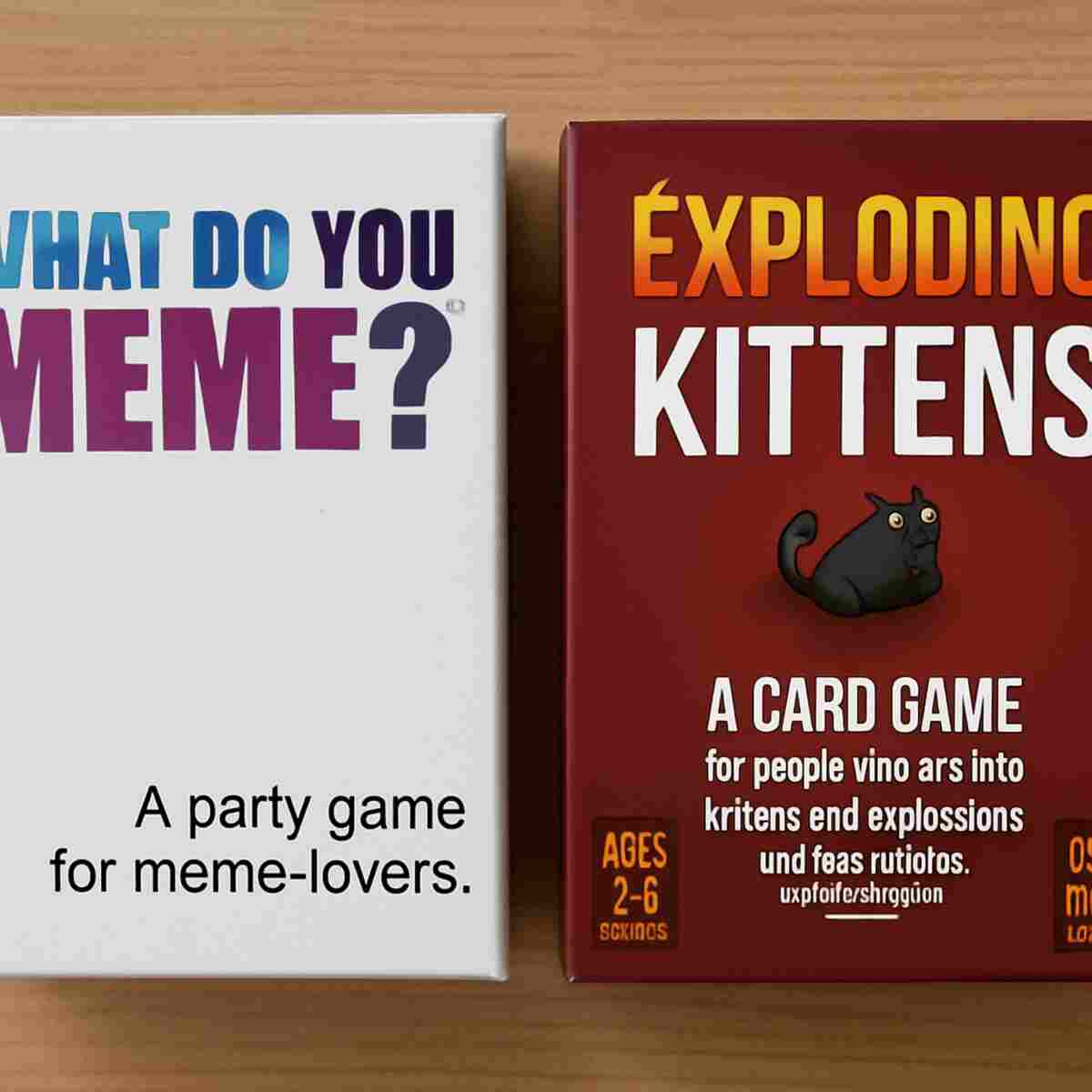
When your three-question check-in lands on “close friends” and a “loud and rowdy” vibe, you’re in the territory of some of the most popular funny card games for groups. These games aren’t about strategy; they’re about generating belly laughs. The reigning champions in this space are often “judging” games, like What Do You Meme?. The rules are simple enough to learn in 30 seconds: a rotating “judge” plays a photo card, and everyone else submits the funniest caption card from their hand. The judge picks their favorite, and that player gets a point. It’s a simple formula for absurdity and inside jokes.
For a different flavor of chaotic fun, you might prefer a game where the goal is trying to mess up your friends’ game directly. Exploding Kittens is the perfect example, a game best described as Russian Roulette with weaponized kittens. The entire goal is to avoid drawing the single “exploding kitten” card that knocks you out of the round. The tension and laughter come from using your cards to skip your turn, peek at the deck, or—best of all—force your friends to draw extra cards, pushing them closer to their doom.
If you enjoy that direct-but-friendly conflict, the next logical step is Unstable Unicorns. Think of it as a cousin to Exploding Kittens, but with a little more to manage. The Exploding Kittens vs Unstable Unicorns debate often boils down to this: Exploding Kittens is about pure survival, while Unstable Unicorns asks you to both build up your own stable of magical unicorns and actively use cards to sabotage your friends’ stables.
To Show Off Your Wits and Spark Creativity
For a clever challenge, a game like Codenames has become a modern classic. Instead of trying to make one person laugh, you’re on a team trying to outsmart your opponents. The concept is genius in its simplicity: one player on your team gives a one-word clue to get you to guess multiple secret agent words on the table, all while avoiding the other team’s words and the game-ending “assassin.” It’s a bestseller for a reason: it’s a brain-teasing word puzzle that works just as well with family as it does with friends, making it one of the best Cards Against Humanity alternatives for mixed groups.
If the idea of giving clever clues appeals to you but you’d rather lean into imagination than word association, games with visual or abstract clues are a fantastic choice. The undisputed star of this category is Dixit. In this game, players use beautifully illustrated, surreal art cards to give clues. The trick is to give a clue—a word, a phrase, even a sound—that is not too obvious and not too obscure. The goal is for some, but not all, of the other players to guess your card. The magic of Dixit comes from seeing how differently everyone interprets the same dreamlike image.
Taking that creativity a step further, some popular and easy-to-learn group card games turn drawing into the main event. But don’t worry—you don’t need any artistic talent. In a game like Telestrations, which is essentially the telephone game with pictures, being a bad artist is often an advantage. You draw a word, the next person writes what they think you drew, and the next person draws that new word. The real joy comes at the end when you see how “Taco Truck” somehow morphed into “A Planet Crying.”
To Turn Strangers into Friends
While a little friendly competition is great, sometimes the goal is simply to bring everyone together. This is where cooperative card games shine. Instead of players competing against each other, everyone works together as a team to beat the game itself. This simple shift completely changes the dynamic, removing the pressure of winning or losing and making them fantastic icebreaker games for small groups where you want to build camaraderie, not rivalry.
A standout example is The Mind, a game with a brilliantly simple, almost psychic premise. Players must work together to play cards from their hands in ascending order without speaking a single word. You have to tune into the group’s collective rhythm and unspoken cues to feel out when the right moment is to play your card. It sounds impossible, but when you succeed, the feeling of being perfectly in sync is an incredible team-building moment.
For a more direct path to connection, get-to-know-you card games like the viral hit We’re Not Really Strangers skip the small talk entirely. This isn’t a game you “win,” but an experience you share. It uses three levels of increasingly personal question prompts designed to build empathy and foster meaningful conversations. It’s a powerful tool for turning acquaintances into friends, or for discovering surprising new things about people you’ve known for years.
No Game Box? No Problem: 3 Classic Games With a Standard Deck
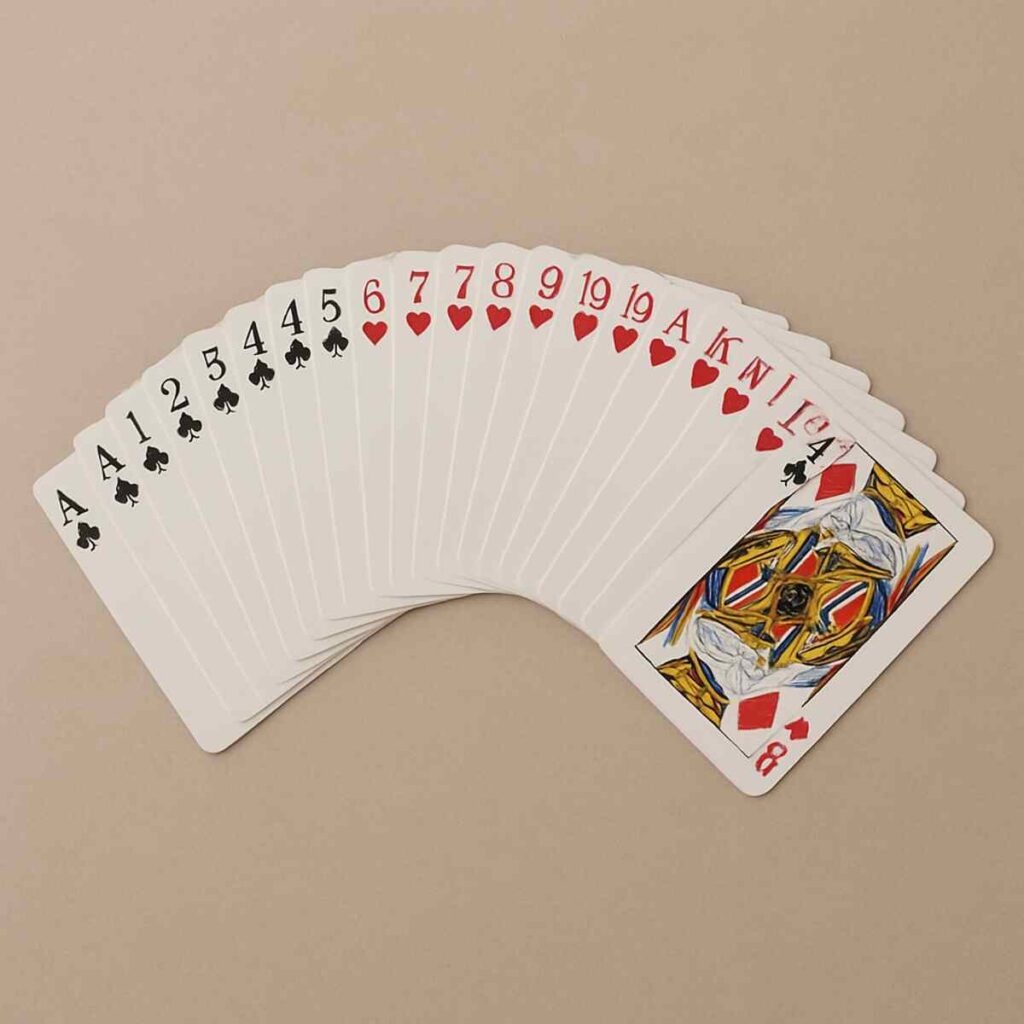
Some of the best party games don’t come in a box at all; they’ve been passed down for generations because they deliver maximum fun with minimum fuss. If you’ve got a standard 52-card deck lying around, you already own a fantastic, high-energy game for almost any age group: Spoons. It’s one of the most beloved classic card games for a reason.
The goal is simple: be the first to collect four cards of the same rank (e.g., four Kings). Arrange chairs in a circle, and in the middle, place one fewer spoon than there are players. Everyone gets four cards, and the dealer starts by quickly passing a card from the deck to the player on their left. The game continues with players rapidly passing unwanted cards around the circle. The moment someone collects four-of-a-kind, they quietly grab a spoon from the center. This is the signal for a frantic scramble as everyone else lunges for the remaining spoons. Whoever is left empty-handed is out for the next round!
If you have pens and scraps of paper, you can play Fishbowl, a hilarious mashup of other party favorites. First, everyone writes a few nouns (people, places, or things) on separate slips of paper and throws them into a bowl, or “fishbowl.” Teams then have one minute to guess as many words as possible over three increasingly challenging rounds, using the same words each time.
- Round 1: Describe the word to your teammates, like in Taboo.
- Round 2: Act out the word, like in Charades.
- Round 3: Give only a single, one-word clue.
For the ultimate custom experience, you can create your own set of prompts by having guests write down inside jokes or shared memories before the game begins.
How to Host a Card Game Night People Actually Love
Creating the perfect party atmosphere is less about the snacks and more about confidence. The number one reason a game night fizzles out isn’t a bad game; it’s a confused host trying to read a rulebook for the first time while everyone waits. The most important step for a successful night happens before anyone arrives: read the instructions. Knowing the basics shows you value your guests’ time and sets the stage for effortless fun.
Once you know the rules, your next job is to teach them effectively. Don’t just read the booklet aloud. Instead, think of yourself as a tour guide for the game, not a lecturer. Start with the single most important piece of information: the goal. “In this game, the goal is to get your teammates to guess these words.” Then, walk through what one player does on their turn. A quick sample round is always more helpful than listing every single exception.
Finally, a great host knows when to stop. The goal is to end on a high note, not to play until people are tired and checking their phones. Pay attention to the energy in the room. It’s far better to end the game when people are still shouting, “Just one more round!” This ensures your party is remembered for being a blast, not for dragging on.
Your Blueprint for the Perfect Game Night
Choosing the right party game doesn’t have to be a guess. With a simple framework, you can find the perfect fit for any situation. By asking who is playing, the vibe you want, and how many people will be there, you can cut through the noise and choose a winner with confidence every time.
This method is your key to unlocking the diverse world of party card games, ensuring you can match the game to the group, whether you need edgy humor for close friends or a clever cooperative puzzle for family. You are no longer just hoping for a good time; you have a clear plan to create one. Go plan a party that’s packed with laughter and connection.
