



In the intricate tapestry of the legal system, the role of a process server is crucial yet often misunderstood. A process server is tasked with delivering important legal documents, such as subpoenas, summonses, and complaints, to individuals involved in court proceedings. This role is pivotal in upholding the principles of due process, ensuring that individuals are properly notified of their legal obligations and rights. Uncover the best info about process server.
In this article, we will delve into the multifaceted responsibilities of a process server, the career opportunities available in this field, and the skills required to excel in this profession.
A process server is a legal professional responsible for serving legal documents to parties involved in legal proceedings. This task might seem straightforward, yet it requires a deep understanding of legal protocols, as well as tact and discretion. The process server acts as a neutral third party, ensuring that legal documents are delivered in accordance with jurisdictional laws, which can vary significantly from one region to another.
The Importance of a Process Server
The role of a process server is indispensable in the legal system. By ensuring that all parties are informed of legal actions being taken against them, the process server upholds the constitutional right to due process. Failure to properly serve documents can result in delays, dismissed cases, or even wrongful judgments.
Moreover, timely and accurate service of process is essential for the smooth operation of the judicial system. Without the proper delivery of documents, court proceedings can be stalled, and justice delayed. This underlines the necessity for process servers to execute their duties with precision and urgency.
Process servers also play a critical role in maintaining the integrity of legal proceedings. By providing documented evidence of service, they help prevent fraudulent claims of non-receipt, thus safeguarding the rights of all parties involved.
The Journey of a Process Server
To become a process server, one must often undergo training and certification processes, which can differ depending on the state or country of practice. This ensures that they are well-versed in the legal requirements and ethical considerations of the profession.
The journey to becoming a process server involves understanding the nuances of legal documentation and the specific regulations governing their delivery. Aspiring process servers often engage in workshops or training programs that cover various aspects of civil procedure and legal ethics. These programs are designed to equip them with the knowledge needed to navigate the complexities of the job.
In addition to formal training, hands-on experience is invaluable. Many process servers start their careers under the mentorship of experienced professionals, learning the practical aspects of the job, such as how to handle difficult recipients and document service efficiently.
Process Server Employment: A Career Path
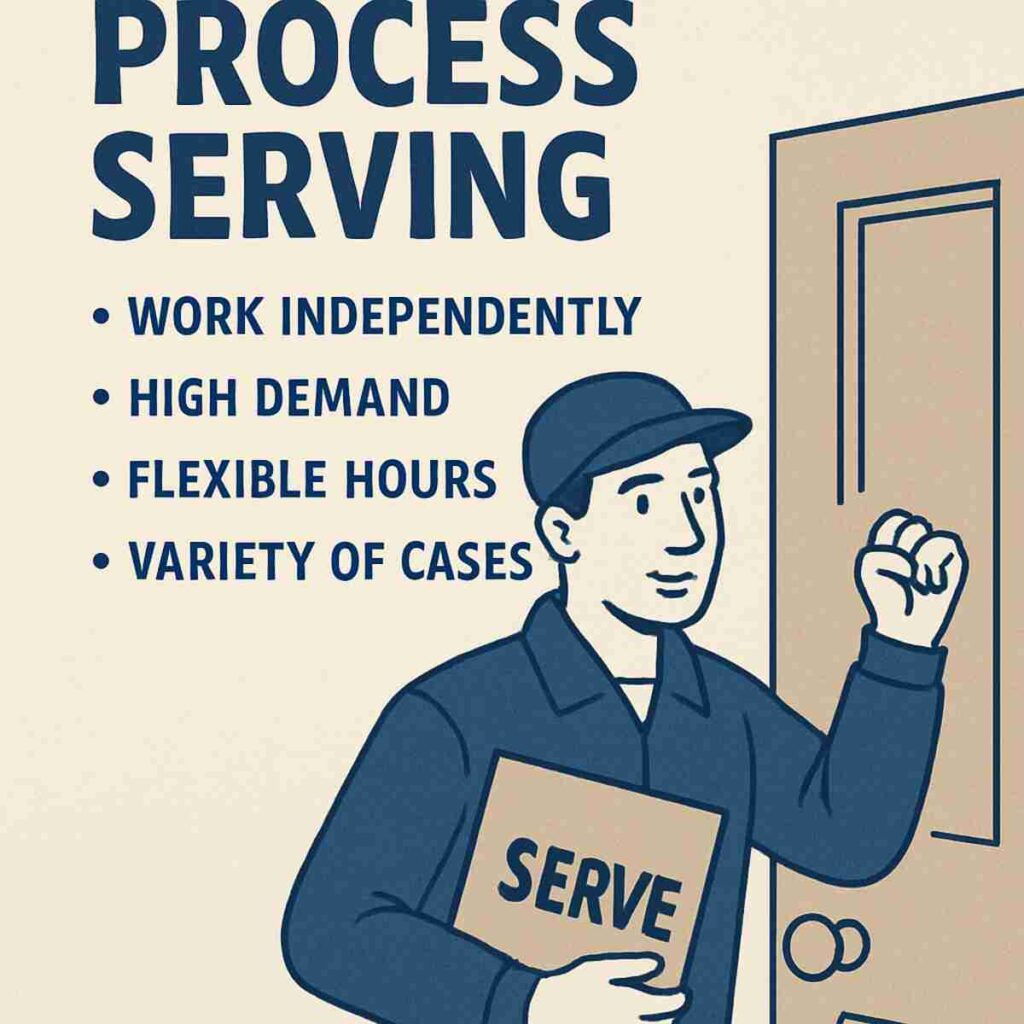
The field of process serving offers a range of career opportunities for those interested in the legal sector but who may not wish to pursue traditional roles such as lawyers or paralegals. Here, we explore the various aspects of a career as a process server.
Career Opportunities
The demand for process servers is steady, as legal proceedings are a constant in society. Process servers can work independently, providing services to law firms, corporations, and private individuals, or they may be employed by a process serving firm.
Independent Process Servers: Working independently allows for greater flexibility and the potential for higher earnings, depending on the volume of work secured. Independent process servers can set their own schedules, choose their clients, and potentially earn more per assignment compared to their counterparts in firms.
Employment with Firms: Joining a process serving firm can provide stability and a steady stream of assignments, often with opportunities for advancement into supervisory or managerial roles. These firms often handle large volumes of work, offering process servers a more structured work environment and the chance to specialize in certain types of legal documents or client sectors.
Government Positions: Some process servers find employment within government agencies. In these roles, they may be responsible for serving documents related to public sector legal matters, offering a unique perspective on the intersection of public administration and legal processes.
Skills and Qualifications
To thrive as a process server, certain skills and qualifications are essential:
- Attention to Detail: Accuracy is paramount when serving legal documents, as mistakes can lead to serious legal repercussions. Process servers must meticulously verify recipient information and document delivery details to prevent any legal challenges regarding service validity.
- Interpersonal Skills: Process servers often interact with individuals who may be uncooperative or hostile. Strong communication and negotiation skills are crucial. They must be able to de-escalate tense situations and maintain professionalism, even under pressure.
- Legal Knowledge: A solid understanding of legal procedures and regulations regarding service of process is necessary. This includes knowledge of jurisdiction-specific laws that dictate how and when documents can be served, ensuring compliance and avoiding procedural errors.
- Time Management: The ability to manage schedules and meet deadlines is vital in ensuring timely delivery of documents. Process servers must prioritize tasks effectively, often juggling multiple assignments with varying deadlines.
Challenges in Process Server Careers
While rewarding, the career of a process server is not without its challenges. Navigating difficult situations and ensuring personal safety while serving documents are common hurdles. Moreover, process servers must remain impartial and professional, regardless of the circumstances they encounter.
One significant challenge is dealing with evasive or confrontational recipients. Process servers must develop strategies to locate individuals who may be actively avoiding service, using investigative skills to track them down.
Another challenge is the physical demands of the job. Process servers often spend long hours on the road, visiting multiple locations and sometimes working irregular hours to catch recipients at home. This requires stamina and a proactive approach to self-care.
Legal changes can also impact the profession. Process servers must stay informed about any modifications in laws that affect how documents can be served, requiring continuous learning and adaptation.
The Process of Serving Legal Documents
Understanding the process of serving legal documents is key to comprehending the role of a process server. The following steps outline a typical service process:
Step 1: Receiving the Assignment
A process server is typically assigned a document to serve by a law firm or a client. The assignment includes details about the recipient and the deadline for service.
Upon receiving an assignment, process servers must thoroughly review all information provided. This includes verifying the accuracy of the recipient’s details and understanding the nature of the documents to be served. This initial step is crucial for planning an effective service strategy.
Communication with the client is also essential. Process servers often need to clarify instructions, discuss any special considerations, and confirm timelines to ensure alignment with the client’s expectations.
Step 2: Locating the Recipient
One of the more challenging aspects of the job is locating the individual to be served. This may involve research, surveillance, and a keen understanding of human behavior.
Locating recipients often requires creativity and persistence. Process servers may use a combination of online databases, social media, and public records to gather information on the recipient’s whereabouts. This investigative work demands patience and resourcefulness.
In some cases, process servers must conduct physical surveillance to confirm the recipient’s location. This can involve visiting known addresses, speaking with neighbors, or observing routines to pinpoint the best time for service.
Process servers also rely on their interpersonal skills during this stage. Engaging with locals or using subtle questioning techniques can yield valuable insights about a recipient’s habits or locations.
Step 3: Serving the Document
The process server must deliver the document in person, adhering to specific legal requirements. In some jurisdictions, alternative methods such as substituted service or posting may be allowed.
When serving documents, process servers must adhere to strict legal protocols to ensure the validity of the service. This includes identifying themselves, explaining the nature of the documents, and following jurisdiction-specific guidelines for delivery.
In situations where direct service is not possible, process servers may employ alternative methods. These can include leaving documents with a responsible adult at the recipient’s residence or posting them in a visible location, depending on legal allowances.
Maintaining a professional demeanor during service is critical. Process servers must manage any confrontations calmly and ensure that all interactions are documented accurately for legal purposes.
Step 4: Proof of Service
After successfully delivering the document, the process server must provide proof of service, typically in the form of a notarized affidavit. This document is a crucial component of the legal process, confirming that the recipient has been properly informed.
Creating a proof of service involves meticulous record-keeping. Process servers document the time, date, location, and method of service, as well as any interactions with the recipient. This detailed documentation is essential for legal validation.
The affidavit of service is a formal declaration that the process server has completed their duty according to legal standards. This document must be accurate and comprehensive, as it can be used as evidence in court to verify that the recipient was properly notified.
Process servers often collaborate with notaries to finalize affidavits, ensuring that all legal requirements for authentication are met before submission to the client or court.
The Future of Process Server Careers
The future of process serving is evolving, with technology playing an increasingly significant role. Digital platforms and databases aid in locating individuals and streamlining the delivery process. However, the need for personal interaction and the human element in serving documents remains irreplaceable.
Embracing Technological Advancements
Process servers are increasingly utilizing technology to enhance their efficiency and accuracy. GPS tracking, digital affidavits, and online databases are just a few tools that are revolutionizing the industry.
The integration of technology allows process servers to access real-time information, improving their ability to locate and serve recipients efficiently. Digital tools also facilitate faster communication with clients and streamline the documentation process.
Despite technological advancements, the personal touch remains vital. In-person service ensures that recipients receive documents in a legally recognized manner, preserving the integrity of the legal process.
Continuing Education and Professional Development
To stay competitive, process servers are encouraged to pursue continuing education opportunities. Staying informed about changes in the legal landscape and honing skills through workshops and seminars can provide a significant advantage.
Professional development programs offer process servers the chance to learn about emerging trends, legal updates, and innovative strategies for service. These opportunities enhance their expertise and adaptability in a dynamic field.
Networking with peers and joining professional associations also contribute to career growth. Engaging with a community of process servers fosters knowledge exchange and provides support, helping individuals navigate challenges and advance in their careers.
Conclusion
The role of a process server is integral to the legal system, ensuring that due process is upheld and that all parties are duly informed of legal proceedings. As a career, it offers diverse opportunities and requires a unique blend of skills and dedication. For those interested in a dynamic and impactful role within the legal sector, process serving presents a viable and fulfilling career path.
By understanding the responsibilities and challenges of a process server, one can appreciate the vital function they serve in maintaining the integrity of the legal process. Whether you are considering a career in process serving or simply wish to understand its significance, this profession remains a cornerstone of the judicial system.