


So, someone just challenged you to a game of Speed, and you have no idea how to play? You’ve come to the right place. Speed is one of the easiest and most chaotic card games to learn, and we’ll skip the boring theory to get you playing—and ready to win—in just a few minutes. Check out buta info to know more
Forget about collecting points or building complex sets. The single objective of the game Speed is to be the first player to get rid of all your cards. According to common card game classifications, this makes it a “shedding” game, where the entire contest is a frantic race to empty your hands and piles before your opponent does. It’s a reverse race to zero.
Understanding how to win at the card game Speed is all about embracing that chaotic race. There are no turns, only a mad dash to play cards faster than the person across from you.
How to Set Up the Game in Under 60 Seconds
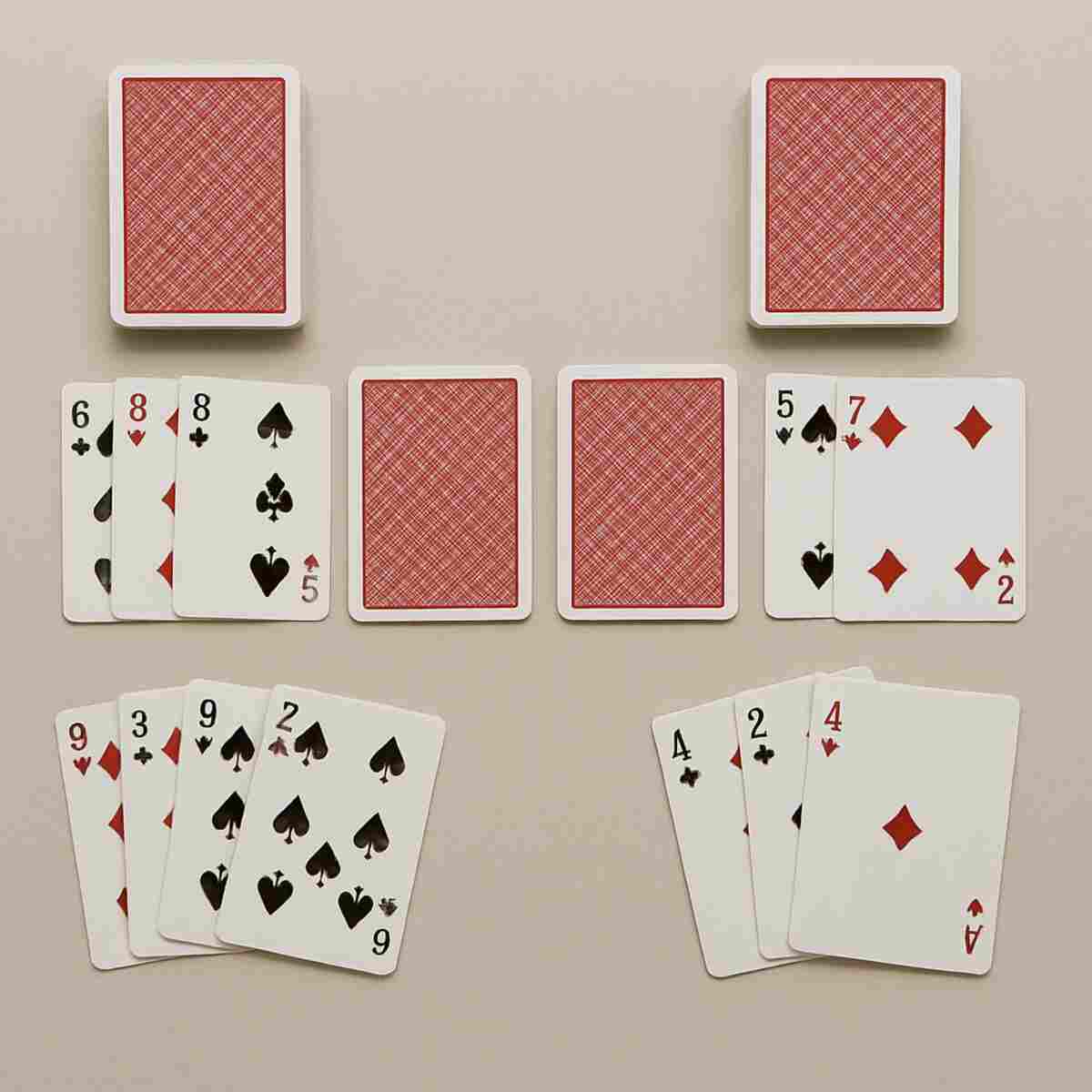
Speed lives up to its name right from the start—you can deal a full game in under a minute. The goal is to create a mirrored play area, with shared piles in the middle and personal piles for each player. Don’t worry about memorizing names yet; just focus on where the cards go.
To get started, follow these four simple steps:
- Shuffle and Deal: Take one standard 52-card deck (no jokers) and deal 20 cards face down to each player. Set the 12 leftover cards aside for a moment.
- Create Your Piles: Each player takes their 20 cards and splits them. Set 15 cards in a single stack—this is your Draw Pile. Place the remaining 5 cards in a smaller stack beside it; this is your Stockpile.
- Place the Center Piles: Now, take those 12 leftover cards. Place two stacks of five cards, face down, on either side of the center line between the players.
- Set the Starting Cards: Finally, place the last two cards face down directly in the middle. These are the Play Piles, and they are where all the action is about to happen.
When you’re done, the table should look something like this, with each player’s area mirroring their opponent’s.
Before the game begins, each player picks up the top five cards from their own Draw Pile to form their starting hand. With the table set, you’re just one flip away from the action.
The Core Rule: How to Play a Card in Speed
Ready to go? To start the game, both players count down “3, 2, 1, Speed!” and simultaneously flip over one of the two center play piles. The race is on! The main rule is simple: you can play a card from your hand onto either pile if it’s one number higher or one number lower. For instance, if a 7 is showing on a pile, you can quickly play a 6 or an 8 on top of it. Suits don’t matter at all—only the rank.
What makes Speed so frantic and fun is that you don’t take turns. Both you and your opponent play cards as fast as you can, whenever you see a legal move. If you have a 10 and see a 9 on one pile, play it! If your opponent then drops a Jack on it, and you have a Queen, you can play that right after. This simultaneous play is the heart of the game, a head-to-head showdown to see who can react quicker and get rid of their cards first.
A special rule keeps the game from stalling out at the high and low ends. While Aces are low (playing on a 2) and Kings are high (playing on a Queen), they also connect to each other. This means you can play a King on an Ace, and an Ace on a King! This “wrap-around” loop is a critical part of the rules of the card game Speed, as it opens up many more opportunities to keep the action flowing.
Keeping the Pace: How to Manage Your 5-Card Hand
As you start playing cards at a frantic pace, your hand will quickly shrink. To keep the momentum going, you can hold up to five cards in your hand at all times. Think of this as your maximum capacity. The moment you play a card onto a center pile, you should immediately draw a new one to replace it. This simple habit ensures you are always armed with a full set of options and ready to react to whatever card your opponent plays.
Those replacement cards come from your personal draw pile—the larger stack of cards sitting face down on your side of the table. It’s one of the most common mistakes in the Speed card game for new players to draw from the wrong stack. Remember to only use your main draw pile for this; leave the smaller side “stock piles” completely untouched for now. They serve a different, very important purpose later in the game.
Keeping your hand full is the most basic strategy for the Speed card game. More cards in your hand simply mean more chances to find a match and stay ahead of your opponent. But even with a full hand of five cards, there will inevitably be times when both you and your opponent stare at the piles, completely stuck.
“We’re Stuck!” What Happens When No One Can Make a Move
This situation is a natural and exciting part of any Speed card game. It’s bound to happen when the cards just don’t line up. When both you and your opponent agree that neither of you can play a card, it’s time to break the stalemate. This is the moment those two small “stockpiles” on either side of the play piles finally come into use. Knowing what to do when no one can play in Speed is key to keeping the game moving.
The process is simple and simultaneous. You both agree you’re stuck, then at the same time, each of you will take the top card from your own stockpile (the one on your side of the center) and flip it face-up onto the play pile in front of you. Don’t draw from your main draw pile—the stockpile rules are specifically for this gridlock moment. This action provides two brand-new cards, instantly refreshing the game.
With two new cards in play, the race is back on! You can immediately start playing cards from your hand onto either of these new cards, following the normal “one up, one down” rule. You’ll repeat this flipping process any time you both get stuck again.
The Finish Line: How You Officially Win the Game
You’ve been racing to shed cards this whole time, and the finish line is finally in sight. The objective of the card game Speed is to be the first player to get rid of all your cards. This means your main draw pile is completely gone and you have successfully played every last card from your hand. Once your draw pile runs out, you simply stop replenishing your hand to five and focus on playing the few cards you have left.
The moment of victory comes down to one final move. To seal the win, you must be able to legally play your very last card onto one of the center piles, following the “one up, one down” rule. Imagine your last card is a Queen, but the play piles show a 3 and a 6. You can’t play! You’re temporarily stuck, waiting for your opponent to play a card that gives you an opening, like a Jack or a King. The rules of the card game Speed apply right up until the very end.
As soon as you legally slap down that final card, you should triumphantly shout “SPEED!” to declare your victory. The game is instantly over at that exact moment—your opponent doesn’t get another turn. Congratulations, you’ve won!
A Simple Winning Secret: How to Choose the Right Pile
Having a slight edge in which pile you choose to play on can make all the difference. One of the most common mistakes in the Speed card game is playing the very first card you see an opening for. A beginner sees a 5 on the pile and slaps down their 6. While fast, it’s not always the smartest move. The real secret is to take a split second to scan both play piles before acting. This quick glance is the foundation of a basic strategy that separates novices from seasoned players.
The magic happens when that quick scan reveals a multi-card play. Imagine one pile shows a Queen and the other shows a 4. In your hand, you have a King, a 5, and a 6. Playing the King is a good move, but it’s only one card. The better play is to slap down your 5 on the 4, and then immediately follow it with your 6. In one quick burst, you’ve gotten rid of two cards instead of one, putting you far ahead of your opponent.
This one simple habit—looking for the play that clears the most cards from your hand—is how to win at the card game Speed consistently. It’s not just about raw speed, but about efficiency. By prioritizing these little chains, you’ll empty your hand and your draw pile dramatically faster. Mastering this trick is key to dominating the game.
Speed vs. Spit: What’s Really the Difference?
You’ve likely heard Speed and Spit mentioned in the same breath, and it’s easy to see why. Both games are a frantic race to get rid of your cards as fast as possible. While they share the same lightning-fast spirit, they are two distinct games with a few crucial rule differences that create a completely different experience. Knowing these distinctions can save you from a lot of confusion when someone asks to play one or the other.
The biggest change between the games is how you manage your hand. In Speed, you must always try to keep five cards in your hand, drawing from your larger pile to refill it. Spit throws that rule out the window; you can hold as many cards as you want, grabbing your entire draw pile at once if you wish! This makes Spit feel even more chaotic, as players juggle a massive fan of cards to find their next play.
Furthermore, the setup and winning conditions are not the same. Spit introduces special “spit piles,” which are stacks of cards you’re trying to empty. When a round ends, the player who grabs the smaller center pile adds it to their personal pile for the next round. The first player to get rid of all their cards from these spit piles is the ultimate winner.
Here’s a quick summary of the main differences:
- Hand Size: Speed has a 5-card limit; in Spit, you can hold as many cards as you like.
- The Stalemate: In Speed, you flip from a shared stock pile. In Spit, each player flips from their personal “spit pile.”
- Winning: You win Speed by emptying your hand and draw pile first. You win Spit by being the first to get rid of your spit piles over multiple rounds.
Bending the Rules: 2 Fun Variations to Try Next
Once you’ve mastered the classic showdown, you might wonder what else is possible. The beauty of Speed is its flexibility. A few simple tweaks can completely change the dynamic, making it perfect for different group sizes or just for adding a fresh layer of chaos to your game night. These are two of the most popular Speed card game variations.
So, can you play Speed with 3 players? Absolutely! To adapt for three people, deal the deck out as evenly as possible. Instead of two center play piles, place three face-down cards in the middle. Everyone flips their card at the same time to start the round, creating a triangular battlefield. The first two players to run out of cards “win” the round, while the last player loses.
For an even wilder game, try Double-Deck Speed. Simply shuffle two standard decks together and deal them out as you would in a normal two-player game. With twice the cards in play, you’ll find far more opportunities to make a move. This version is faster, longer, and delightfully more frantic, as duplicate cards can appear at any moment.
Ultimately, these variations show that Speed is a game meant to be played, not just followed. Feel free to experiment with these rules or invent your own. As long as everyone is racing to get rid of their cards, you’re doing it right.
You’re Ready to Play (and Win!): Your 30-Second Recap
That’s it! You now know everything you need about the rules of the card game Speed. Where you once saw a confusing shuffle of cards, you can now see the setup for a fast-paced showdown. You’re ready to go from reading the rules to dominating the table.
The entire game boils down to a simple, four-step flow. If you ever need a quick reminder, just think of this:
- Setup your piles and draw your 5-card hand.
- Flip the centre cards and start playing cards one-up or one-down.
- If stuck, flip from your side-piles.
- The first to play their last card from their hand wins!
The best way to remember these steps is simply to play. Don’t worry if your first game is a little messy—that’s part of the fun. Grab a friend, a deck of cards, and see for yourself why Speed isn’t just a game, it’s a race.
